

🎲 Your Computer Can’t Generate Random Numbers (But It Fakes It Pretty Well!)
In today's edition, we’ll explore how computers generate random numbers, why true randomness is difficult, and the clever methods used to ensure security and unpredictability in technology.

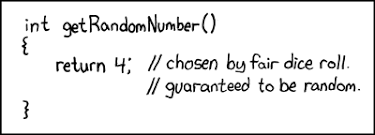
Have you ever heard someone say, "Your computer can’t actually generate random numbers"? Sounds strange, right? 🤔 I mean, computers can do almost everything! They solve complex problems, beat humans at chess, and even predict the weather. But when it comes to randomness, they fall short. Let’s uncover the mystery of why computers struggle with randomness and how they fake it to keep everything running smoothly!
🔍 Computers are Deterministic by Nature
First, let's start with a simple truth: computers are deterministic. That’s just a fancy way of saying that they always follow instructions to the letter. If you give them the same input, they’ll give you the same output every time, no surprises. It’s like baking a cake—use the same recipe and ingredients, and you’ll always get the same result.
But randomness? That’s more like flipping a coin. You never really know whether you’ll get heads or tails. And computers just aren't designed to handle unpredictability. So, how do they manage? 🤷♀️
🎩 The Cheat Code: Pseudo-Random Number Generators (PRNGs)
When a computer needs random numbers, it typically uses Pseudo-Random Number Generators (PRNGs). A PRNG is an algorithm designed to generate sequences of numbers that appear random. However, they aren't truly random. The sequence is determined by an initial value known as the seed. If you know the seed and the PRNG algorithm, you can predict the entire sequence of numbers it generates.
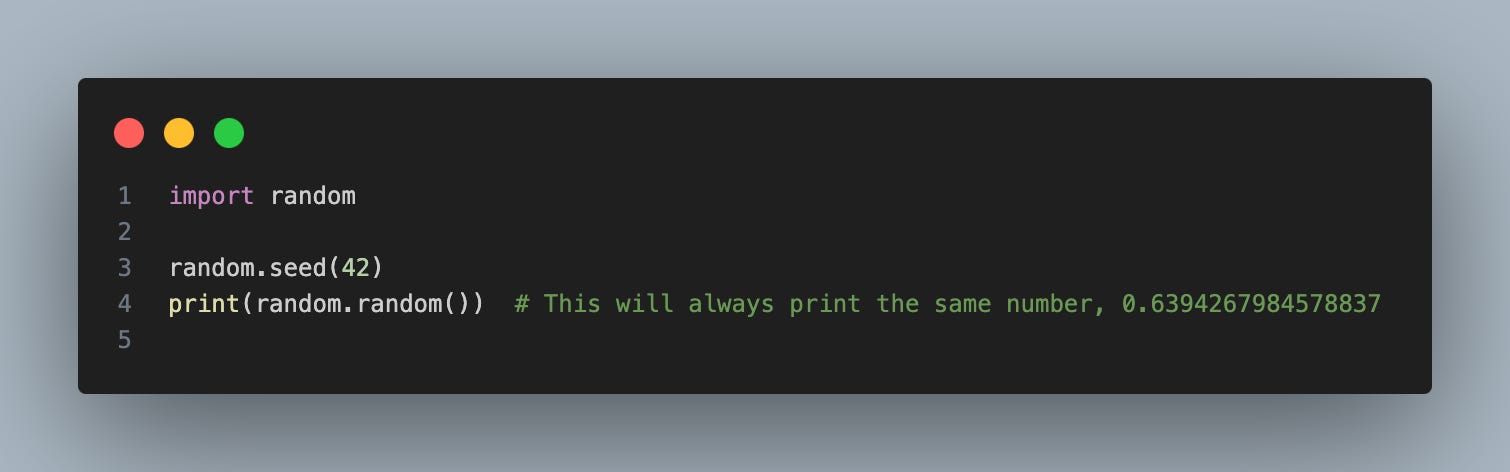
This snippet of code will always produce the same "random" number (0.6394267984578837) because the seed is fixed.
PRNG algorithms, like Mersenne Twister or Linear Congruential Generator (LCG), are widely used because they’re fast and provide a sufficient level of randomness for most applications, including simulations, games, and non-cryptographic processes.
🌋 Real-Life Randomness: The Lava Lamp Trick
So, what about times when we need real randomness? Think of things like secure encryption for your bank transactions. For that, we need randomness that no one—not even the smartest hacker—can predict.
One famous example is Cloudflare’s Lava Lamp Wall. Yes, you read that right—lava lamps!

Cloudflare, a company that helps secure websites, uses the random movements of lava lamps to generate truly random numbers. They have a wall of lava lamps, and a camera records the constantly changing patterns of swirling liquid. Since the motion is unpredictable and constantly different, it serves as a great source of randomness. It’s real-world chaos that can’t be replicated by a computer formula! [Read more]
🌍 Other Sources of True Randomness
Lava lamps aren’t the only source of randomness. There are lots of weird and wonderful methods for generating random numbers:
☢️ Radioactive Decay: Some systems measure the unpredictable decay of radioactive material. Since no one can predict when an atom will decay, it’s a great source of random numbers.
🖱️ Mouse Movements: Some programs generate random numbers by tracking the random ways humans move their mouse across the screen.
💫 Cosmic Background Radiation: The leftover radiation from the Big Bang is used by some researchers to create truly random numbers. It’s literally randomness from the universe itself!
💡 Why Do We Need Random Numbers Anyway?
Random numbers are more important than you might think. Here are just a few ways they keep our digital world running:
🔐 Security: Whenever you log in to your bank account, send an encrypted message, or visit a secure website, random numbers are used to create cryptographic keys that protect your data.
🌧️ Simulations: Scientists use random numbers to model real-world systems like weather patterns, traffic flow, and disease spread.
🎮 Games: From rolling virtual dice to deciding random events in video games, randomness helps make gaming more fun and unpredictable.
Fun Fact: The 🎲 Tower at Random.org
There’s a website called Random.org that uses real randomness for its services. One of their methods involves a physical dice tower—an actual machine that rolls dice and records the results, which are then used to provide true random numbers to users. They even have a livestream of the dice tower in action!
The next time you hear about a secure website or play a game that has random events, you’ll know there’s a lot more going on behind the scenes than just flipping a digital coin. And who knows—maybe your random number came from a lava lamp or a rolling dice machine!
Wrapping It Up
So, while your computer might not be able to generate true random numbers on its own, clever tricks and hacks make sure that randomness is still possible. From lava lamps to cosmic radiation, the world is full of unpredictability—and that’s exactly what keeps things interesting in the digital age.
🤓 If you enjoyed learning about the quirky ways randomness is faked and generated, share this with a friend! Next time you log in to a secure site or roll virtual dice, you’ll appreciate the chaos hiding behind your screen.
👉 Looking for new opportunities? Explore Airtribe's job board for exciting career opportunities.

If you have any questions or want to continue the conversation, just hit reply or add a comment here! I'd love to hear your thoughts.
 | A guest post by
|